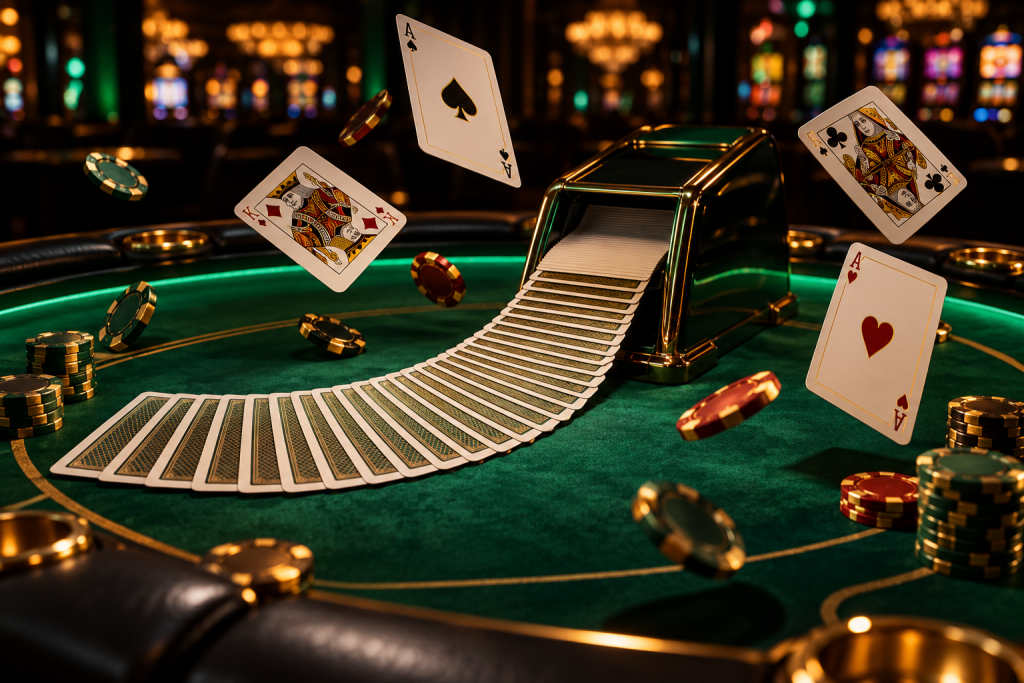
blackjackSingle Deck vs Double Deck Blackjack: Which Gives Better OddsA single deck generally changes the maths in the player's favour compared with a double deck, but the full rule set matters more than the deck count alone.00
blackjackHow Many Decks Casinos Use for BlackjackBlackjack is dealt from a shoe holding one to eight decks depending on the table, and the deck count changes the house edge and basic strategy. Learn how to read the table rules and why the number matters.00
blackjackHow Many Card Decks Are Used in BlackjackBlackjack is dealt from one to eight standard 52-card decks depending on the table rules. The number of decks changes the house edge and how you should read basic strategy charts.00
blackjackMulligan Card in Blackjack: How the Rule WorksThe mulligan card is an optional rule some blackjack tables use to let a player discard one starting hand and draw a fresh one. Here is how the mechanic works, what it changes about the hand, and what to check in the table rules before you sit down.00
blackjackThe Theoretical Card Limit in a Blackjack HandA blackjack hand ends when a player busts, stands, or reaches 21, but the theoretical maximum number of cards a hand can contain is set by the deck composition and the rule that aces count as one or eleven.00
blackjackHow Multiple Decks Change Blackjack OddsMultiple decks shift the blackjack house edge through the probabilities of drawing specific cards. This article explains the mechanics, how deck count interacts with the rules, and what it means for the rate at which a player's bankroll erodes over time.00
blackjackDoes Blackjack Use Every Card in the Deck?Blackjack is dealt from a standard 52-card deck, but the number of decks in play and the cards removed from action change what you will see at the table. Learn how the shoe is built, why cards disappear, and what that means for the game.00
blackjackCalculating Blackjack Probabilities From the ShoeA practical walkthrough of the counting method behind blackjack odds: how to build the probability of drawing a card, combine those probabilities for a hand, and why those numbers describe long-run averages rather than what happens on the next deal.20